 Game Reviews
Techland’s Dying Light was an oddball choice to become one of gaming’s most resilient modern franchises, but that’s what happened. The decision to merge the open-world zombie action seen in the first Dead Island (they did not develop its sequel) with fluid parkour movement must have sounded like madness at the time, but these two wildly different flavors would prove irresistible together.
Dying Light 2 Stay Human, released 7 years later, was an ambitious follow-up that attempted to expand on what fans loved about the original but this would prove controversial. Many of these complaints centered around changes in art direction and storytelling, with gaudy colors and cartoon-level characters and dialogue that felt at odds against the more realistic backdrops and themes. For some, quests to retrieve perfume and fight levitating, fireball-spitting creatures diminished the darker tone and immersive elements from the first game.
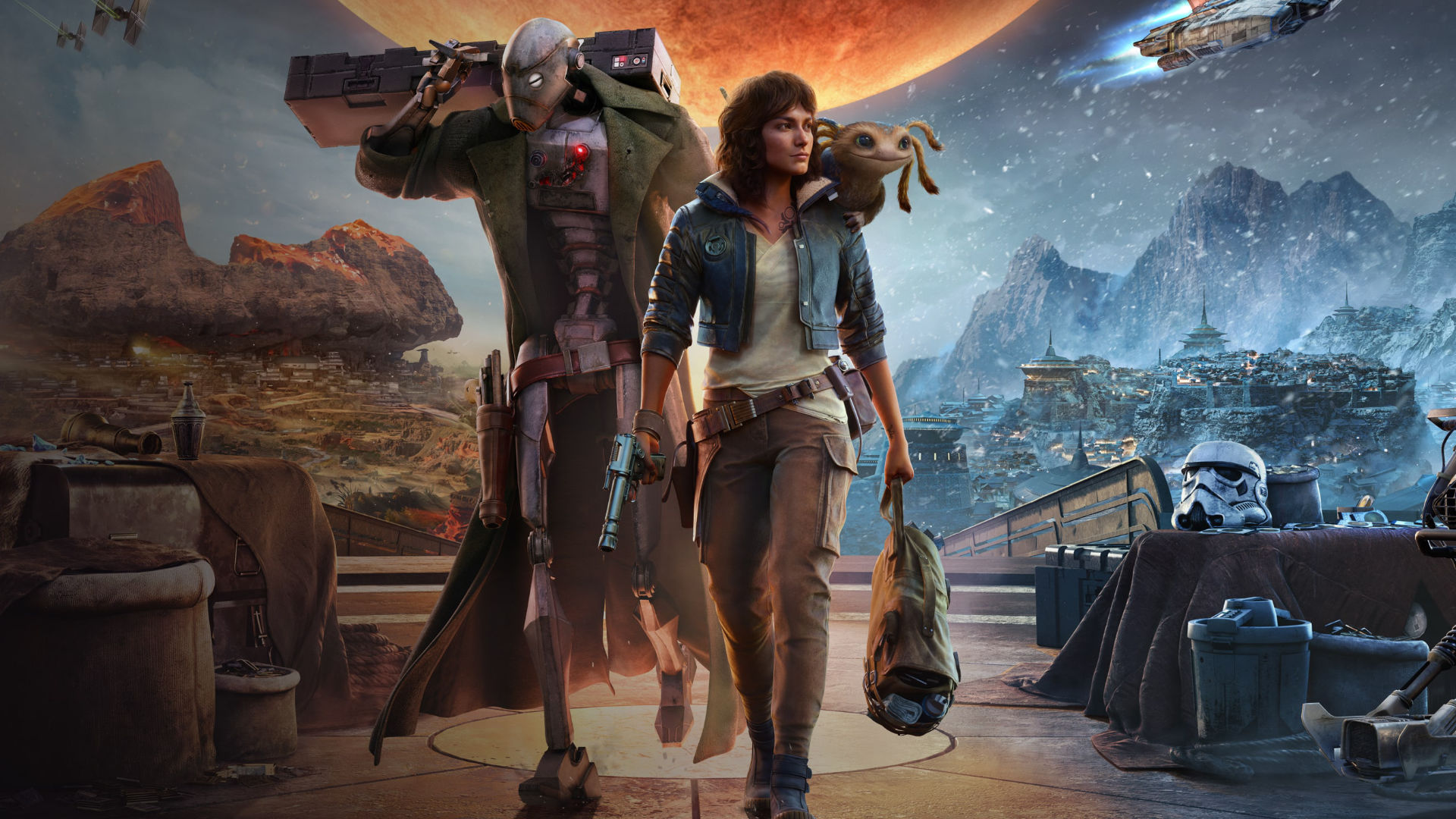
Dying Light: The Beast was originally intended as DLC for Dying Light 2, but it looks, feels, and plays exactly like DLC for the original game. Virtually all of the odd design choices from the sequel are absent, as are most (but not all) of the nonsensical fetch-questing that extended that game’s running-time to the point of exhaustion. Most importantly, the overall feel of the original game’s sense of dread and excitement has returned, warts and all.
Nowhere is this more evident than with the return of Dying Light’s favorite protagonist, Kyle Crane (voiced once again by Roger Craig Smith), the undercover GRE (Global Relief Effort) agent who was airdropped into the zombie-infected city of Harran before eventually learning the truth and breaking free of the organization, all white taking down warlords and countless infected in the original Dying Light.
It was the events in the first DLC, The Following, that set up the plot for The Beast, which saw Kyle returning to stop a crazy cult in the outskirts of Harran. That game introduced vehicles to the franchise, which also return in The Beast, but concluded with our hero transforming into a Volatile hybrid and saving the day, which many assumed ended his story for good.
Like Marvel films, death means little in videogame land, and it turns out Kyle wasn’t dead but had been kidnapped, tortured and experimented on for 13 years by an evil genius known as the Baron, aka Dr Marius Fischer. In true supervillain fashion, we learn the Baron owned a biotech engineering company prior to the zombie outbreak, and now is attempting to perfect the virus so he can control what’s left of the world.
Disoriented and bedridden, things start looking up for Kyle after a fellow test subject causes a ruckus and all hell breaks loose. In the chaos, Kyle is able to escape the lab, guided by the help of a mysterious woman named Olivia, into Castor Woods, a gorgeous area in the Western Alps that was popular with tourists before the zombie apocalypse. This proves the perfect locale for a Dying Light adventure as it’s been completely infested with the undead, significantly more than other games in the series.
Olivia explains how the Baron created Chimeras, other human-Volatile hybrids like himself but way more powerful. But their existence offers a silver lining; inside them is a substance called Genetically-Symbiotic Beast, or GSB. Once defeated, their GSB can be extracted and injected into Kyle, giving him deadlier Beast powers for the ultimate showdown with the Baron in true Mega Man fashion.
The core gameplay loop of the original Dying Light (and its DLC) returns in The Beast, meaning Kyle runs, climbs, and dashes his way through various zombie-infested areas while evading zombies, smashing zombies, slicing zombies, pummelling zombies, and even gunning down a few. Ammo is scarce in the apocalypse, so he’ll have to make use of anything that can be weaponized for melee attacks, but even these won’t last forever and he’ll need to constantly repair weapons to the breaking point, literally.
To survive he’ll scavenge whatever he can to craft health kits or ammo, and restoring power to safe zones helps give Kyle resting (or restoring) points between missions or death. The cycle of day and nighttime exploration remains, which means zombies – and Volatiles – will make short work of Kyle in the dark, so it’s best to strategize before heading out and know when it’s safe to move between areas.
Mercifully, the number of ridiculous fetch-quests have been paired down in The Beast, though a few remain as side-quests rather than part of the mainline story (missing shoes, anyone?). These mostly serve to enhance the ambience rather than enhance the playing time. Completing them all means the difference between a 20+ hour runtime to a 40+ hour one, so you’ll definitely get back what you put in.
Unfortunately, Dying Light’s wonky combat returns, for better or worse. It’s fine slicing through zombies with a variety of blades, hammers, axes, swords or sticks (which can be great fun) but fighting against humans can be exhausting, especially when your attacks don’t connect as they should. There’s a greater emphasis on ranged weapons here, so save your bullets and arrows for the humans.
No surprise, but Beast Mode is the real star as Kyle basically Hulks out for a brief period of time, monstrously smashing, pounding, and tearing through anything in his path. It’s a great way to quickly clear out infected areas and finish off Chimera bosses, though he’s not invincible and can still die. Taking down Chimeras and absorbing their powers is possibly the most videogame thing ever seen in a Dying Light game, just don’t make Kyle angry; you wouldn’t like Kyle when he’s angry.
While the more lush, more rural areas of Castor Woods may not provide the dizzying heights and scalable towers of Harran, there’s still plenty of mountains, hills, and cabins to climb on and scale as Kyle leaps and dashes through this sizable open-world. Certain cars and trucks can also be driven to help cut down on backtracking, just make sure you’ve filled the tank before getting in the driver’s seat.
Dying Light: The Beast looks beautiful, which isn’t surprising how much the previous games have been updated over the years. The original game looked great when it was released back in 2015, but Techland never stopped tinkering with their engine or squashing bugs, releasing an enhanced version just prior to The Beast.
This makes it harder to appreciate the generational leap in visuals on their own terms, but The Beast is still a looker, with gigantic, sprawling landscapes absolutely packed with detail and climbable objects or test your parkour skills on. The lush, rolling grassy hills dotted with bales of hay and sunlit waterways are among the most beautiful we’ve seen in any Dying Light game.
Seeing scores of zombies listing along them really drives home the fact this world now belongs to them. This is aided by an impressive score by Olivier Deriviere that builds on the themes of loss and dread, but also hopeful optimism, mixing familiar leitmotifs with bursts of exciting new arrangements. This might be the best work the composer has ever done.
The most impressive thing about The Beast visually are the absurd number of zombies onscreen at once, especially in the more sprawling areas. The downside to this undead upgrade is in variety, or lack thereof. You’ll quickly recognize the exact same zombie models over and over, regardless of where you find them. The Following DLC was creative in how certain zombies were tied to certain areas, which added surprising depth as undead would be outfitted properly to their locales. The only instance of this happening in The Beast is tied into gameplay; military convos require keycards to open, and they can only be found on the corpses of fallen soldiers in the area.
This predictability extends to much of the game, honestly, and it’s not long deja vu as the exact same scenarios, animations, and even plot motivators recycle again and again. Whether it’s with the mainline missions (clear safehouses, connect electrical wiring, retrieve documents, kill all the bandits, etc.) or how they play out (doors will be locked, infected must be cleared, etc.) can feel predictable after the tenth or so time. How many times can Kyle get double-crossed by people he thought were friendly? Or when “survivors” call for help? Wash, rinse, repeat… or in this case, scrounge, craft, and survive.
None of this will be surprising to longtime Dying Light fans, of course, as the developers have found neat and clever ways to build exciting and tense scenarios around these moments, always keeping the real focus on the series’ incredibly addictive gameplay loop of sense, survive, and if all else fails, destroying everything in your way. In a genre overflowing with endless streams of garbage, no other zombie game has come close to providing the same visceral thrills and chills as Techland’s open-world zombie-parkour hybrids have.
This being a Techland game you wouldn’t be shocked to hear there’s a fair amount of glitches, most of them hilarious (headless zombies clipping through doors) but sometimes less funny. Occasionally my character would get stuck inside objects or would lose the ability to attack, rendering the game unplayable. Restarting the game usually helped, but one time this aberration overwrote my save file and it seemed like my campaign was permanently corrupted.
The issue was resolved by uninstalling and reinstalling the game, but I’m not sure how patient I’d have been if my 20+ hour investment was lost to glitches. Cloud saves for the win, I guess.
Conclusion:
Eschewing much of the design and artistic choices of the sequel in Dying Light: The Beast may confirm what some sensed about Dying Light 2, that even Techland wasn’t entirely happy with how it turned out. Whether this will be seen as a return to form – or capitulation – will depend on how much you liked the sequels’ newer direction or preferred the original game. Personally, The Beast feels like a realignment of purpose, and I prefer the tone and feel of the first games, especially as their mix of zombie survival and parkour remains incredibly addictive, fun, and there’s nothing else quite like it.
 Movie Reviews
 Tech Reviews