 Book Reviews
While largely unknown outside of Japan, English-reading manga fans may already be familiar with Shintaro Kago’s work thank to recent translations of Super-Dimensional Love Gun or the Dementia 21 collections, signaling him as a talent worth your attention. In a world of manga horror that can feel stuck between reprints of classic gekiga stories or never-ending Junji Ito releases (not that I’m complaining), it’s nice to see a relatively newer artist take on a genre that too often feels creatively spent.
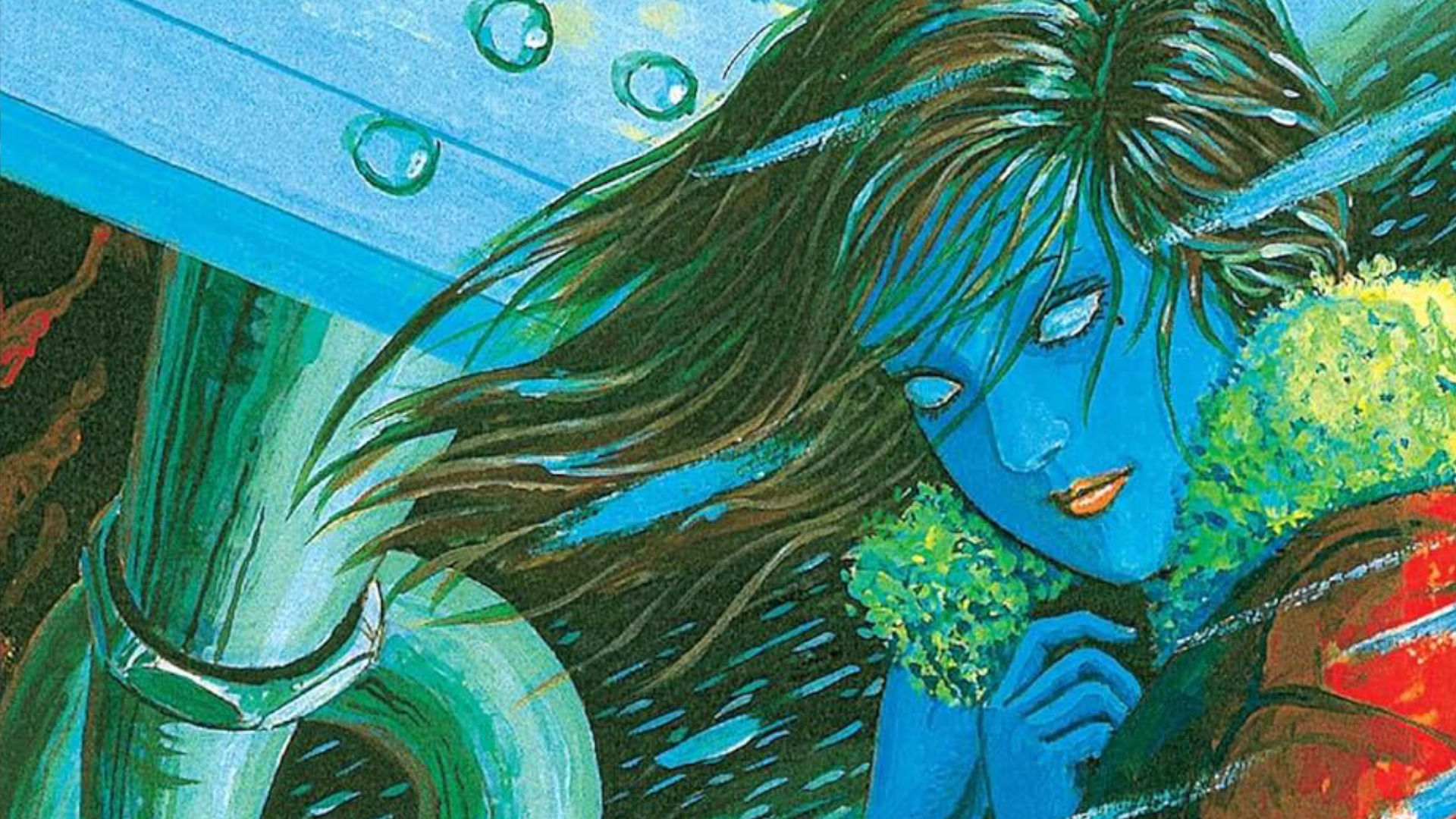
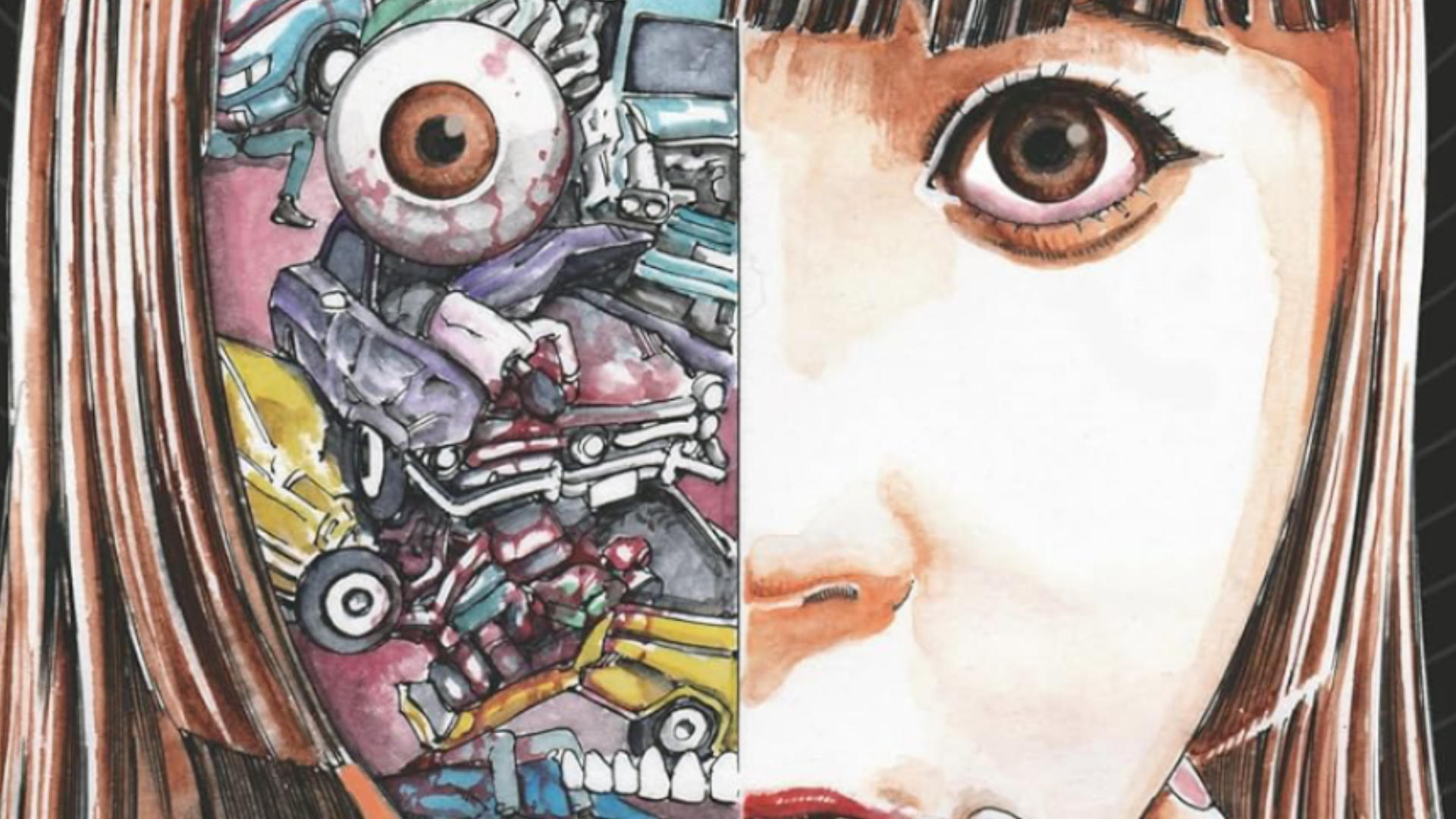
Brain Damage is an anthology of manga collecting four short tales (translated by the always reliable Zack Davisson) in one handsome volume that’s a great showcase of Kago’s impressive artwork and high-concept storytelling that isn’t afraid to visit the darkest of dark places. While his execution – no pun intended – of these ideas can feel inconsistent at times, Kago’s sincerity manages to bleed through the spotty patches when it matters. Pun certainly intended.
I’m no fan of trigger warnings for content clearly meant for adults, but there are moments in this collection (and with most of Kago’s work) that could make some readers uncomfortable, especially when stories depict extreme sexuality (“Family Portrait”) both thematically and visually. Consider this your first and only warning.
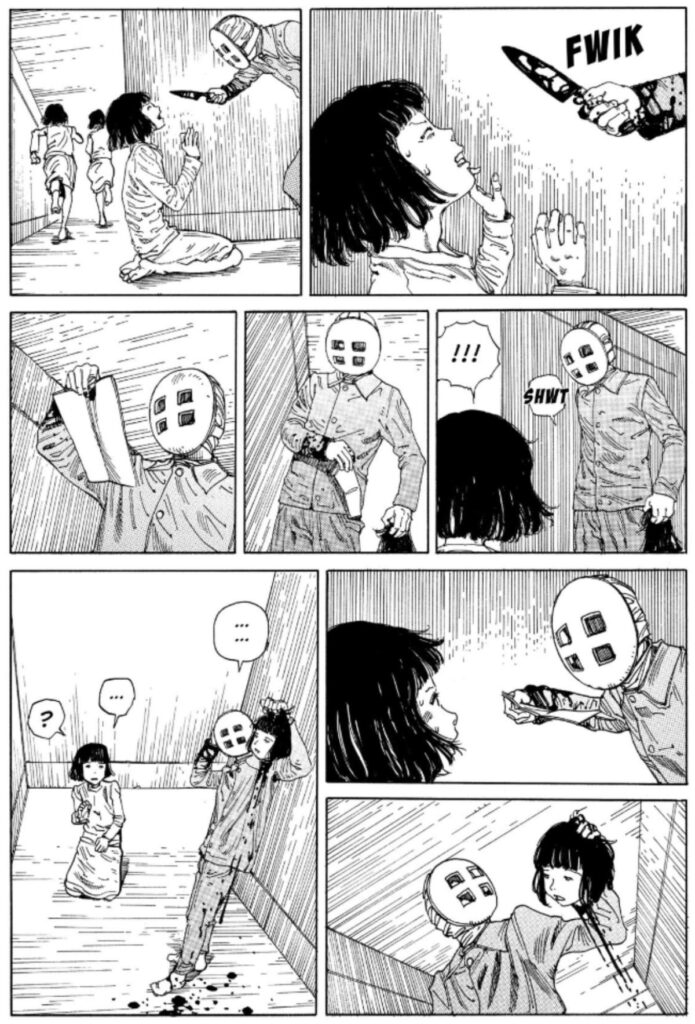
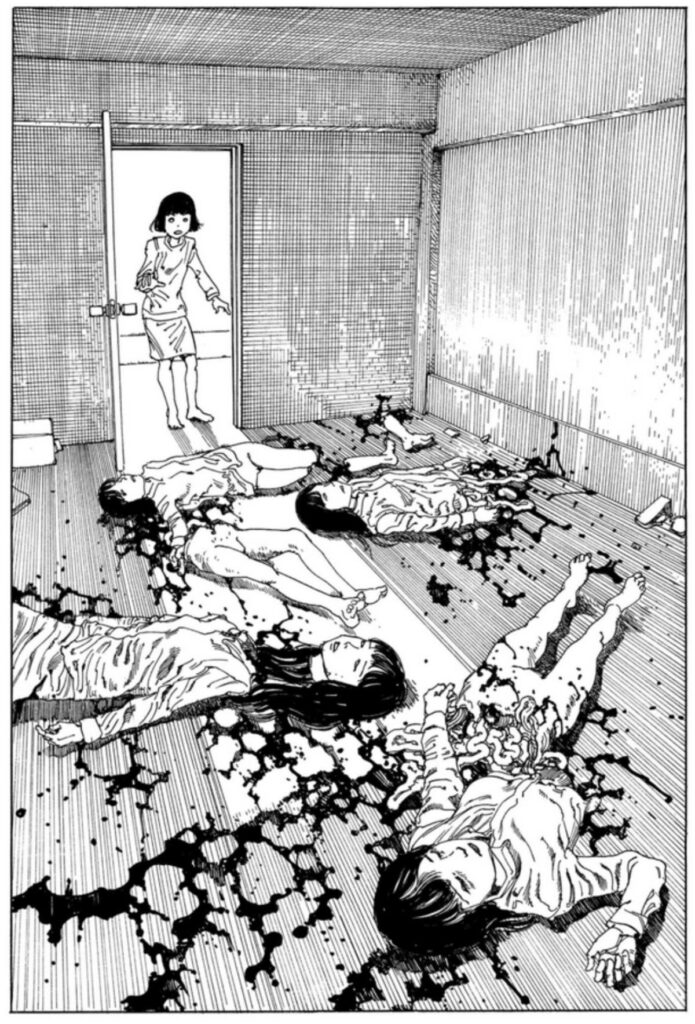
“Labyrinth Room” combines the claustrophobic anxiety of an escape room with the terror of being stalked by an unknown killer, not unlike Vincenzo Natali’s original 1997 cult-classic movie Cube (or its Japanese-only 2021 remake).
“Family Portrait” is destined to be the most discussed, and most reviled (or for some, their favorite), in the collection for many reasons, if only for the scenes of sexual perversion. Which is a real shame, as the underlying themes of the loss of self and restraint of those suffering from Alzheimer’s are presented in a legitimately unique way. Those who can manage to overlook the story’s, um, unique wrapping might find some sympathy with the plight of its characters.
The real gimmick of “Curse Room” is best left for readers to discover for themselves, though I will say it involves caring for the undead. Kago invokes the legendary George A. Romero when explaining the difficulties trying to craft a “new” zombie story in this era of endlessly forgettable knock-offs, but he’s managed to do just that here.
“Blood Harvest” proves that haunted cars aren’t just the domain of Stephen King. A blend of investigative and body horror, the concept of vampiric automobiles wrecking havoc across Japan could be interpreted as a shrewd condemnation of capitalism’s literal bloodlust for eschewing affordability at your own expense. It also contains the collection’s most brutal and gut-churning visuals.
Conclusion:
Shintaro Kago’s Brain Damage won’t (and given the content, probably shouldn’t) be for everyone as his penchant for extremely realistic violence and provocative subject matter can make fellow horror mangaka Junji Ito look almost family-friendly in contrast. The four stories in this collection often cycle between thought-provoking and exploitive, but they’re never dull. Kago’s plotting can feel a little haphazard, but there’s no doubt he’s piloting one hell of a ride. Buckle up.

 Game Reviews
 Movie Reviews
 Tech Reviews